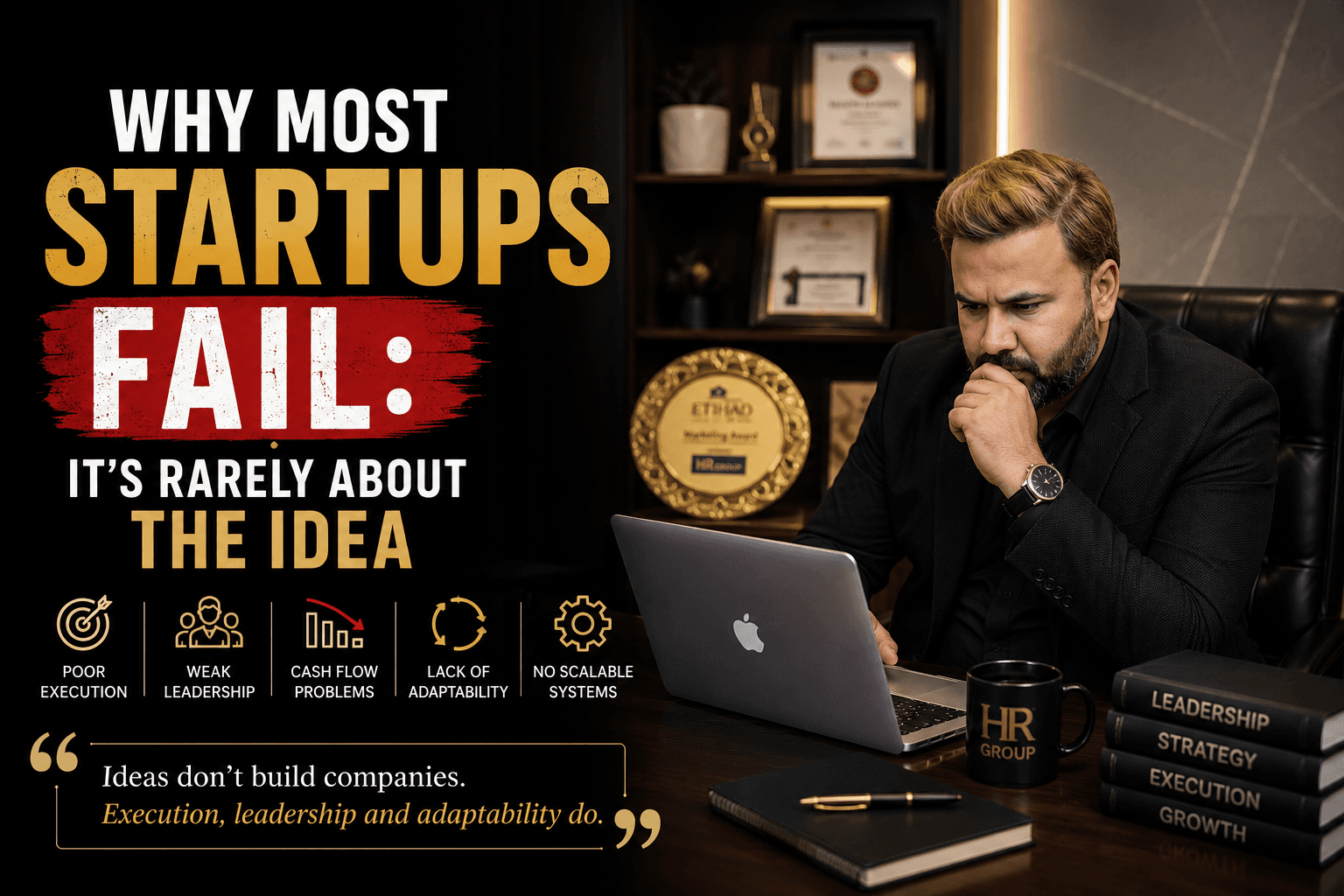

In today's entrepreneurial landscape, innovative ideas are everywhere. Every day, aspiring founders develop ambitious business concepts, identify market opportunities, and envision solutions capable of transforming industries. Yet despite this abundance of creativity, only a small percentage of startups evolve into sustainable businesses.
The reason is surprisingly simple.
Ideas inspire businesses, but execution builds them.
Throughout my entrepreneurial journey, I have observed that success rarely belongs to the individual with the most revolutionary idea. Instead, it belongs to those who possess the discipline to execute consistently, adapt to changing circumstances, and remain committed even when progress appears slow.
The Execution Gap
Many entrepreneurs spend months refining business plans, researching competitors, and waiting for the perfect opportunity to launch. While preparation is important, excessive planning often becomes an excuse for inaction.
Execution bridges the gap between ambition and achievement.
Every successful business starts with uncertainty. No entrepreneur begins with complete knowledge or perfect conditions. Instead, they learn by engaging with customers, responding to market feedback, and continuously improving their products and services.
The market rewards those who take action—not those who simply continue planning.
"An idea may capture attention, but execution earns trust. Businesses are remembered for what they deliver, not for what they promise."
Progress Over Perfection
One of the most common mistakes among first-time entrepreneurs is pursuing perfection before taking action.
Many founders delay launching because they believe every process, feature, or strategy must be flawless. In reality, perfection is rarely achieved before execution—it is achieved through continuous improvement.
Every successful company has evolved through customer feedback, operational challenges, and lessons learned from mistakes.
Progress should always take priority over perfection.
Businesses that improve consistently will always outperform businesses waiting for the perfect moment.
Building Systems Instead of Dependency
As organizations grow, entrepreneurs must shift their mindset from doing everything themselves to building systems that allow the business to operate efficiently.
Many startups fail to scale because every decision depends on the founder.
Sustainable businesses create processes that empower teams, improve accountability, and maintain operational consistency.
Execution becomes scalable only when systems replace dependency.
Consistency Creates Competitive Advantage
Entrepreneurship is often portrayed as a series of breakthrough moments.
In reality, sustainable success is built through disciplined execution over long periods.
Small improvements made every day compound into significant competitive advantages over time.
Successful entrepreneurs focus less on dramatic achievements and more on maintaining operational excellence, delivering value to customers, and continuously improving every aspect of their business.
Consistency creates momentum, and momentum drives long-term growth.
Continuous Learning Is a Business Advantage
Markets evolve.
Technology reshapes industries.
Customer expectations continue to rise.
For entrepreneurs, learning cannot be treated as an occasional activity. It must become part of the organization's culture.
The most successful business leaders remain curious. They seek feedback, study changing market trends, and embrace new ideas without losing focus on their long-term vision.
Businesses that learn faster than their competitors are often the ones that lead their industries.
Key Takeaways
- Great ideas create opportunities, but execution creates successful businesses.
- Progress is achieved through consistent improvement rather than perfection.
- Strong systems allow businesses to scale efficiently.
- Trust is earned by delivering on commitments, not by making promises.
- Continuous learning remains one of the strongest competitive advantages in business.
Final Thoughts
Entrepreneurship is not defined by the originality of an idea alone.
It is defined by the willingness to execute with discipline, make difficult decisions, learn from setbacks, and continue moving forward despite uncertainty.
Every successful organization began as a simple idea. What transformed those ideas into lasting enterprises was not inspiration—it was consistent execution.
As entrepreneurs, we should spend less time searching for the perfect opportunity and more time building the habits, systems, and mindset required to execute effectively.
Because in business, execution will always outperform intention.